The Prehistory of Computing II

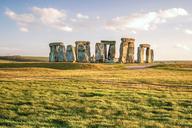
In part I of this two-part series we covered lookup tables and simple devices with at most a handful of moving parts. This time we’ll pick up in the 17th centuries, when computing devices started to became far more complex and the groundwork for later theoretical work began to be laid.
Read more...

The Prehistory of Computing I

What is a computer, really? Where did it come from? When did we realize we could trick rocks into doing our math homework for us? In this two-part series, I’ll cover the origin and early history of computing and computer science, starting in prehistoric Africa and ending in Victorian-era England.
Read more...

The Art and Mathematics of Genji-Kō

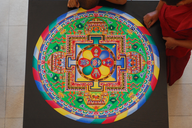
You might think it’s unlikely for any interesting mathematics to arise from incense appreciation, but that’s only because you’re unfamiliar with the peculiar character of Muromachi (室町) era Japanese nobles. There has never been a group of people, in any time or place, who were so driven to display their sophistication and refinement.
Read more...

Stacking Triangles for Fun and Profit

One thing you may have noticed about the trigonometric functions sine and cosine is that they seem to have no agreed upon definition. Or rather, different authors choose different definitions as the starting point, mainly based on convenience. This isn’t problematic or even particularly unusual in mathematics: as long as we can derive any of the other forms from any starting point, it makes little difference which we start from.
Read more...

Cracking Playfair Ciphers

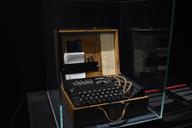
In 2020, the Zodiac 340 cipher was finally cracked after more than 50 years of trying by amateur code breakers. While the effort to crack it was extremely impressive, the cipher itself was ultimately disappointing. A homophonic substitution cipher with a minor gimmick of writing diagonally, the main factor that prevented it from being solved much earlier was the several errors the Zodiac killer made when encoding it.
Read more...

A Seriously Slow Fibonacci Function

I recently wrote an article which was ostensibly about the Fibonacci series but was really about optimization techniques. I wanted to follow up on its (extremely moderate) success by going in the exact opposite direction: by writing a Fibonacci function which is as slow as possible. This is not as easy as it sounds: any program can trivially be made slower, but this is boring.
Read more...

A Fairly Fast Fibonacci Function

A common example of recursion is the function to calculate the $n$-th Fibonacci number: def naive_fib(n): if n < 2: return n else: return naive_fib(n-1) + naive_fib(n-2) This follows the mathematical definition very closely but it’s performance is terrible: roughly $\mathcal{O}(2^n)$. This is commonly patched up with dynamic programming.
Read more...

Craps Variants

Craps is a suprisingly fair game. I remember calculating the probability of winning craps for the first time in an undergraduate discrete math class: I went back through my calculations several times, certain there was a mistake somewhere. How could it be closer than $\frac{1}{36}$? (Spoiler Warning If you haven’t calculated these odds for yourself then you may want to do so before reading further.
Read more...

Complex Numbers in R II

This post is part of a series on complex number functionality in the R programming language. You may want to read Part I before continuing if you are not already comfortable with the basics. In Part I of this series, we dipped our toes in the water by explicitly creating some complex numbers and showing how they worked with the most basic mathematical operators, functions, and plots.
Read more...

Complex Numbers in R I

R, like many scientific programming languages, has first-class support for complex numbers. And, just as in most other programming languages, this functionality is ignored by the vast majority of users. Yet complex numbers can often offer surprisingly elegant formulations and solutions to problems.

Read more...